Prayer for a Dead Bird - Sala des Rosiers
I once saw a pigeon, brains blown out, staining the pavement of the Plateau Mont-Royal. I must have been about 17. It was a beautiful hot Montréal August and all around me the cityfolk burst with humming energy, bargaining over plump summer strawberries and lounging about on yellow sun chairs. An old man with no shoes wandered by, singing deep from his chest, a scrappy dog weaving through his quilted legs. And there by my feet was this dead bird, pink meat and feathers spread over tar. My eye caught on its limp shape and it burned itself through my nervous system in a miasmatic pulse. For those few desperate seconds I prayed away my eyes, and life compressed into one singular damaged breath.

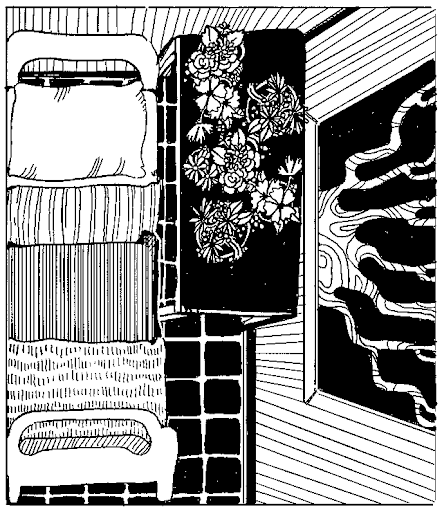
For a few months now I have been decorating my grandmother’s hospital room with flowers. I wander into the psych ward, my gut tangled in a snail’s shell, and do my best to quiet the ugly greys of the walls with February blooms. With each visit the stems pile up into a wilting garden in plastic cups. As I watch my grandmother’s disintegration, her very being grown crumpled and gaunt with chronic sorrow, I think of the bird sprawled across the pavement, staining the earth dark, and through it all, my helpless bearing-witness.

She told me once that Montréal winters feel like dying – how she stood still, barely twenty, over the freshly splattered remains of a man who found the metro tracks a kinder death than the impenetrable snow. Surely this whole city is steeped in her ghosts and a desperation for spring, accumulating bodies piling up in the family plot. The young trees of the graveyard are skeletal and she is fifteen watching her mother die, grown translucent and paper thin as the cancer devours her.
The cemetery crowns the mountain in the center of the city, made of layer upon layer of corpses and somber stone in concentric circles up the hillslope. It is beautiful in that way of old things, but it has taken her mother and her childhood and compressed them under layers of cold soil. Things do not last here – the mountain, once covered in pine, has been made acidic with 12,000 years of falling needles, sharp and sour. Soon enough her mother and the wooden coffin will be chewed up, the twisting cancer vanquished and disseminated after five long years of battle, back to the worms and this soil of the dead.
The death broke everyone in the family, and no one grew back quite right. Her father grew back angry – shattering glass and red hot slaps across the face of his four children, the apparitions of their dead mother. He became miserly and seemed to rot from the inside out. When he grew old the doctors had to saw off his pus-filled leg.
And the children grew up broken. Eighteen, fifteen, fourteen, ten, all with the same blue eyes of storms.


Montréal is a city of staircases tumbling up the brick houses like vines. It was also, when my grandmother was a girl, a city of nuns in their raven habits, their hanging skirts drenched in the smell of tobacco as they flocked together in the Catholic school smoke room. These women lived by a moral code that was punitive and harsh, borne of violent humility and a penchant for little cruelties. When my grandmother turned twelve the nuns told her parents to have her teeth removed from her mouth. They saw in her small body the vanity of beauty and meant to snuff it out. So the dentist, his own hyena mouth tinged yellow by cigarette, tore each milk white tooth from her pink gums.
As she swelled into a woman anyway the brick house of her father became an unbearable cage and the salted winter streets of the city pressed hard against her soft bits. The bird women held her too-young body afloat after her mother’s death, knotting her close and nearly choking her within their feathered arms. How easily the frozen brick city and the seed of her lifelong sorrow might’ve swallowed her up if not for her love affair with beautiful things.
She met my grandfather, all scratchy gruff browns and iconoclastic sentiments, working as a journalist in Montréal. They were two brash flames of people ill-equipped for partnership, but in their time together she used him to pull herself free. They played at farmers, setting up camp on the upper reaches of the gulf of the Saint Lawrence about as far up as you can go before people disappear altogether. My grandfather took to raising sheep for meat, stretching their broken bodies high up to gut, skinning and snipping away at every bit of flesh. His beard became sticky with red blood. My grandmother, rapidly expanding from the middle, presided among the bees. She would walk out to their hives and sing to them, and to her growing son, in looping French. She liked it best when the small buzzing creatures would kiss against her skin with diamond wings.
When my grandmother left my grandfather, clinging her small boy to her hip and bleeding heavily between the legs from a botched abortion, home was no longer anywhere in particular. She became a story collector, and it was this that saved her – folded scraps of people kept inside the cavity of her heart, a collection of souls spread out and pinned like bugs in a filing cabinet ready for recall. Her vast wells of generosity for those she loved served her well against the coming storm. She found her way to Colorado mountain valleys and began to learn a different way of being, unshackled from the Montréal cold and her mother’s God.
I grew up in a cemetery, too; stretching out forever beneath the winding clouds and cradled by mountains. There, the sky is endless and when night comes you can catch falling stars. The older people said that my baby sister was one of them, leaping through the darkness.


My grandmother would walk me through the graves of the children’s section of the cemetery and show me over to her own plot, close to my sister’s, waiting to welcome her home. Through the fence of the cemetery we could glimpse a schoolyard, preschoolers at play in the sandbox, radiant with laughter. My grandmother told me that my dead sister and all the other ghost children were at play beside them, tiny voices braiding together in the wind. I was only three but worried that I’d done something wrong, that the gobbling anxiety within me had stolen my sister’s breath.
So I grew up in a world of ghosts. I gave my world stories, making meaning of the Colorado skies stretched purple with June rain and the mountains that scrape clouds, rocks tinged red as if by the leaking of a robin’s heart.
I knew well that in the world of alive things there were wandering sprites, caring for each ripening flower and living out their own dramas at miniscule scale. One tree, tucked on the bank of a small tributary near my house, seemed to me so vast that I was sure she was the mother of everything within the reach of her winding roots, rocks and minnows alike. I would go to her to spill my sorrows. Another, grown sideways, was where the fairies were born and stretched their wings. With my playmates I would visit the tree and whisper secrets for her to hold, and she would transform them into little fairy guardians of the underfoot. I would leave them offerings, maple leaf dresses and the water sack found within helicopter seed pods carefully pulled apart by clumsy child fingers. In those days I made my grandmother sing until sleep took me, keeping watch against our ghosts.
When I was small I was enchanted by her. She was scarves and lilting music and hypnotic incense. She lived in an apartment complex by Boulder Creek but somehow the mundane brick of it all – the chlorine pool and the magic of buzzing in on the intercom – never lost its magic.
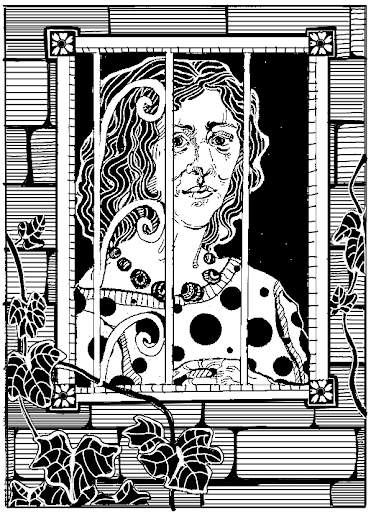
The ground of her small garden was shellacked with the distinct orangey slate you find everywhere in Boulder, and everywhere else was gobbled up whole by common ivy. The piles of vine seemed to be the mother of all horrors – bad things waiting within to grab at my ankles and pull me under the netting, breaking apart my body bit by bit for spare parts. Sometimes I’d brave the ivy nonetheless to take a spin on the galloping plastic carousel horse who reigned over the yard. Other times, when my grandmother threw a garden party and the porch was choked full of people and noise, I would bypass the ivy and turn the corner to the part of the garden where nobody went. It was made of cobbled stones and scraggly trees and a little fountain, and it seemed to me a forgotten place. A window covered in wrought iron bars overlooked the decrepit corner, and sometimes I’d rap my knuckles against the glass and my grandmother would appear, having slipped back into the apartment to replenish the wine. Then we’d talk, or sing, in imitation of a fairy story through the bars.

When my sister was born dead, purple as a bruise and too quiet, my father climbed up Flagstaff with her body so that his daughter could feel the mountain air against her soft skin. All he could give her was a moment that had to hold an entire life. My father was not yet thirty and holding the world within his arms, compressed into a perfect inviable seed that could never again know sun. Then he returned his baby to her broken mother and they burned her. They gave her a catalpa tree for lungs, a handful of her ashes feeding its curious roots, as if to rewrite her suffocation.
There is a bittersweet irony in giving a child dead from lack of air to a catalpa, whose bark in other times was brewed to treat ailments of the lungs. So my sister grew to be a tree universe, her heavy blooms feeding drunk honeybees and her leaves bleeding sticky sweet sugars for the ants that guard her soft plant flesh. With each passing year I reveled in the fattened spring flowers and swinging summer’s end seed pods growing plentiful in our backyard, leaves large as dinner plates. She must now, at seventeen, soar above me by tens of feet, still planted in the earth of my long ago home.


We left Colorado when I turned ten. My mother had to say goodbye to her baby once again, leaving her tree daughter cradled by the mountain valley that had given her life even in death. My family reassembled on the feather-cracked fault lines of California, and somewhere along the winding path of growing up my understanding of the world percolated with miniscule cracks.
My grandmother moved with us out west despite her four decades of life under the Colorado sun – a move she did not handle with grace. Through her eyes I saw my new home as twisted and ugly. I hated the scratchy sand of the beach, the churning hills weighed heavy with wine grapes like costume jewelry. I came to see my grandmother in a different form, in turn: no longer the dazzling butterfly but something much more angry. I watched her viper sharp stabs at my mother and the invented reality she spun herself into, the decadent beauty of words now becoming her prison.


When my grandmother’s baby brother died of metastasized cancer gnawing down his bones, all four children were reunited in a temporary peace after decades of poisonous hate as he joined their mother in the acid ground. For the first time in my life I saw my grandmother and her sisters stand side by side. Each of the women sat like glassy spiders at the center of their web, and I watched as they wound their threads around each other and themselves, pulling the cord tight around their aching discontent. Winter is the time of life when misery is eaten for supper in heaping spoonfuls, and at the end of their long years no sister has anywhere left to hide from its insistent fingers.
I watch the story collector flail out for relevance, succumbing to winter. My father and his children grown, her people all on the brink of their own solitary darkness, her brother intermingled with their mother’s matter and centuries of corpses. And so, like a dying sun, she throws out whipping tongues of fire and flickering, growing, devouring despair.
On my first visit to her hospital room I found her very small, as if run through the trash compactor and bruised brown-green with age. She was a child despite outnumbering me by decades. I had to put myself away and take her into my arms – once, I had been small and she folded me into music to make the night seem gentler. Now, I am much larger and she is hooked up to IV fluids, and she tells me that she misses her mother. I sing to her, and in the quiet hum of the hospital room, life’s pendulum flips.
She tells me she is afraid of the aloneness of dying. I cannot be sure if my own curious, kinder feelings towards death are a matter of naivety and a long way ahead of me, or simply because all I expect from dying is comfortable silence and wormfood, rather than the remnants of judgmental angels and the cruel glare of dead nuns.


I have never been to Montréal in winter, so to me the city is hot summer rain and traffic cones and feeling like a child again, lost within a language I can only sometimes follow. In summer the streets bleed green with foliage, a few glorious months of humidity and bursting pollen-heavy flowers and the odd alive smell of rainwater percolating through the asphalt before the snow comes again. It is no longer the city of flocking nuns, but something young and always on the verge of laughter; where birds instead of men die splayed out on concrete. So as I happened upon my dead pigeon I thought the closest thing I could to prayer.
Little bird, I hope death is gentle, that it tosses you good seeds to eat and nestles your broken head against its neck. As your body dissolves back into the world I think it will rejoice to be whole with you, whom we were only borrowing.
Then I said goodbye and found my way through the winding city’s heart and up the mountain. When I met my family, silent as they were under layers of earth and framed by a thick granite cross bearing my great-grandfather’s name, my grandmother wept. We played music and danced by the stone.


Comments